
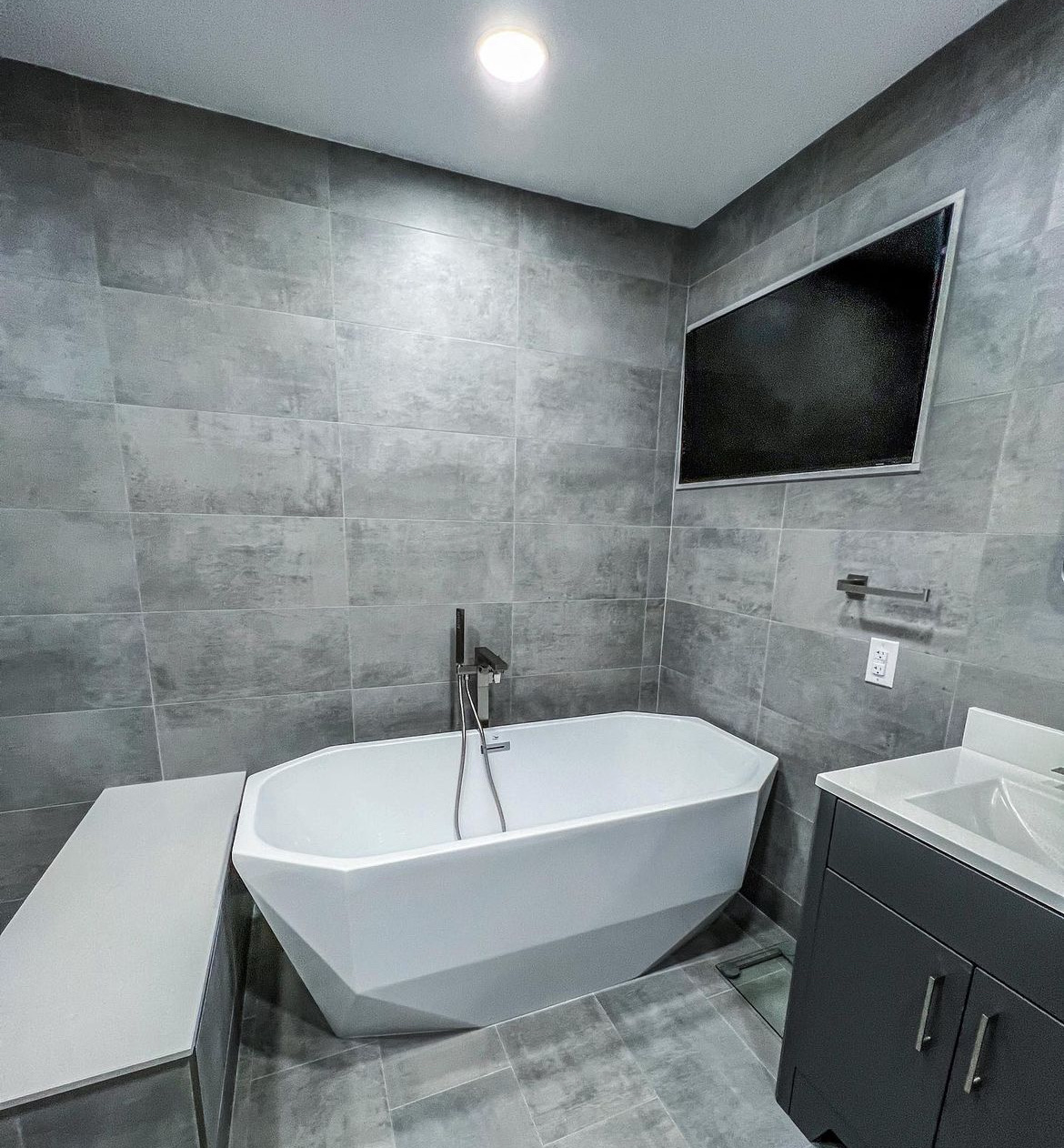
What Reddit Tells Silver Spring Homeowners About Bathroom Contractors
Bathroom permits in Silver Spring are split between two agencies. Montgomery County DPS issues the interior alteration and electrical permits, while plumbing and gasfitting go through WSSC Water, and only a WSSC licensed master plumber can activate that permit. Reddit threads here agree on checking the MHIC license first. Remodel Now remodels bathrooms in Silver Spring and across Montgomery County.
What Silver Spring homeowners are actually asking
Look for Reddit discussion about hiring a bathroom contractor in Silver Spring and there is less of it than the size of the place suggests. There is a Silver Spring subreddit, but a June 2026 post there asking for bathroom remodel recommendations drew no replies at all. The conversation that does happen sits one step up, in r/MontgomeryCountyMD, where people in Silver Spring, Wheaton, Kensington and Takoma Park ask the same questions year after year.
That regional framing is correct for half the problem and misleading for the other half. Licensing, contracts and deposit limits are state questions, answered the same way in Silver Spring as in Gaithersburg. Permits are not. They change at a city line, and inside Silver Spring they are split between two separate agencies, which is the detail most of the threads get tangled up in.
Strip away the specifics and the same concerns surface every time. Is this contractor licensed, and how would I check. Who pulls the permits, and does this job need any. How much money should change hands before anyone shows up. What happens when the work fails after the tile is on.
In a February 2025 thread, u/shotazz asked for contractors who "service the silver spring area" and added, "I would appreciate if they are MHIC license." The rest of the post was about reliability rather than skill: the poster wanted "people that will actually show up on time or call back at the minimum." Almost nobody in these threads worries about tile selection. They worry about hiring the wrong company with no way to tell in advance.
The MHIC license check, and why it is not a formality
The most repeated advice in these threads is to check the license before signing. Most people repeating it cannot say exactly why it matters, and the real reason is more concrete than "it proves they are legitimate."
Maryland licenses residential remodelers through the Maryland Home Improvement Commission. The license covers alteration, remodeling, repair and replacement work on a building used as a residence, which puts a bathroom squarely inside it. The Commission's own advice to homeowners is blunt about what to do before signing: ask to see the license, check with the Commission that it is still current, and confirm that a number painted on a truck is valid and issued to that contractor. The same page warns that a "licensed and bonded" claim may mean nothing, because bonding companies typically do not issue performance bonds for residential jobs.
The reason to actually run the search sits in the Guaranty Fund, which reimburses homeowners for actual losses caused by unworkmanlike, inadequate, incomplete or abandoned work, and only where the contractor held a license when the contract was signed. Hire someone unlicensed and that route closes permanently. A claim also has to be filed within three years of discovering the loss.
So the license is not a quality rating. It is the thing that keeps a recovery route open when work fails, and it costs a minute to verify. Threads in this county do that check informally and constantly. In an October 2026 recommendation thread, u/geekydreams answered a glowing review with one question before anything else: "Are you licensed and insured?" The job described was tile, a bathroom cabinet and paint, in Silver Spring. That instinct belongs on every bidder. Remodel Now remodels bathrooms in Silver Spring and across Montgomery County, and the same verification applies there as anywhere else: the company name, address and MHIC license number belong on the contract, and that number is publicly searchable before anyone signs it.
Who is allowed to pull the plumbing permit here
This is the question Reddit gets wrong most often in Montgomery County, because the answer is unusual and people repeat whatever was true where they used to live.
Plumbing and gasfitting permits in Silver Spring do not come from the county. They come from WSSC Water, the utility that runs water and sewer across Montgomery and Prince George's counties and enforces its own plumbing code inside both. The county handout makes the handoff explicit, listing plumbing on the permit-required side with the instruction to contact WSSC. The utility's homeowner permit page states that most plumbing projects must be done by a WSSC Water licensed plumber or gasfitter.
The 2024 WSSC Plumbing and Fuel Gas Code is more specific about who may hold the permit. Any person may pay the fees, but the permit stays inactive until a WSSC licensed master plumber or gasfitter is added to it through the Commission's electronic permit system. A general contractor cannot activate it. A plumber licensed elsewhere in Maryland cannot activate it either, because this is a WSSC license, issued and examined by the utility, separate from any state credential.
Redditors here get it partly right. In a March 2022 thread, a homeowner wrote, "One plumber I talked to yesterday told me there wasn't even a permit for what I'm doing. It's very confusing." A commenter who identified as a general contractor licensed in Maryland and DC answered that a permit was needed because walls were opening and plumbing was moving, and pointed at both the county site and the WSSC permit portal.
There is a homeowner route, narrower than people assume. WSSC lets an owner occupant of a single family home hold a plumbing permit, but the conditions are real: proof of ownership, an affidavit that the house is not being remodeled for sale or rent, approved drawings, and a timed open book exam with a passing score of seventy percent. Projects involving seven or more fixtures are off limits, as is all gasfitting.
What Montgomery County DPS requires, and what it leaves alone
Everything that is not plumbing runs through the Montgomery County Department of Permitting Services in Wheaton. Silver Spring is unincorporated, so there is no city office above it.
DPS publishes a plain handout, a guide to building permits and home improvements, and a bathroom project lands on both of its lists. Interior alteration and electrical work need a permit. Cabinets, floor coverings, wall repairs and painting, bathroom caulking, and replacing a receptacle in the same location do not. Pulling a vanity and setting a new one in the same place on the same supply and drain is finish work. Moving the lavatory three feet, adding the exhaust fan the house never had, or taking out a wall to steal closet space is not.
The electrical side is where older Silver Spring bathrooms get expensive in ways nobody budgeted. A licensed master electrician applies for that permit. The residential code the county adopts, the 2021 International Residential Code, carries the electrical rules for a house: ground fault protection on bathroom receptacles, at least one receptacle within thirty six inches of the outside edge of each lavatory basin, and at least one twenty ampere branch circuit serving the bathroom receptacles and supplying no outlets outside the bathroom. In a 1950 rambler whose only bathroom outlet sits in a medicine cabinet on a shared circuit with the hall light, that last rule is what turns adding a receptacle at the vanity into a wire pull from the panel.
The split between the two agencies catches people constantly.
- What it issues for a Silver Spring bathroom. Montgomery County DPS: Interior alteration and electrical permits. WSSC Water: Plumbing and gasfitting permits.
- Where the rules are written. Montgomery County DPS: The county's adopted codes, including the 2021 International Residential Code. WSSC Water: The 2024 WSSC Plumbing and Fuel Gas Code.
- Who may hold the permit. Montgomery County DPS: A licensed master electrician, for the electrical permit. WSSC Water: A WSSC licensed master plumber or gasfitter.
- Common work that is exempt. Montgomery County DPS: Cabinets, floor coverings, painting, caulking, a receptacle replaced in place. WSSC Water: A fixture replaced without touching concealed piping or rearranging valves, pipes or fixtures.
- Where to ask before signing. Montgomery County DPS: MC 311 at 240-777-0311. WSSC Water: WSSC ePermitting.
Why permit advice from Rockville does not travel to Silver Spring
Montgomery County has nineteen incorporated municipalities, and Silver Spring is not one of them. Rockville, Gaithersburg, Takoma Park, Kensington and Poolesville are. That is why permit advice from a coworker two zip codes away is often useless.
A January 2025 thread shows the gap. u/othelloblack described "a pretty big overhaul of the bathroom including rewiring the lights, pulling out the sink and toilet and replacing them," in a house "within the city limits of Rockville." The top answer was yes, and that MC 311 is helpful on what is required. Another commenter posted Rockville's own residential permit FAQ, which is the more precise answer, because the City of Rockville runs its own Inspection Services Division and issues its own building and trade permits inside city limits. The county handout says as much in a footnote, warning that it does not cover municipality or homeowner association rules.
For a Silver Spring address the picture is simpler, and the simplicity is the point. DPS for the alteration and electrical permits, WSSC for plumbing and gas, no municipal office in between. A condominium board may still have its own process, and the venting path for a new exhaust fan usually needs association permission before anyone cuts into a shared wall.
That same thread shows the other reason local advice is unreliable. Several commenters argued that permits are optional in practice and that a trusted contractor can simply skip them. One wrote that "it's just easier to hide inside work because once the wall is closed up, you may or may not ever get caught." That is an accurate description of enforcement and a poor description of risk. The risk shows up later, at resale, at a claim, or when the next owner's inspector finds an unvented drain behind new tile.
Deposits and contracts, and what Maryland actually caps
Deposit questions come up constantly, usually after a salesperson has asked for half the job up front. Maryland sets a hard limit that most homeowners have never heard.
A contractor cannot accept more than one third of the contract price as a deposit, and cannot accept any payment at all before the contract is signed. The homeowner must receive a signed copy before work starts. Those three rules settle most of the arguments that end up in a thread.
The required contents are worth reading before a first meeting rather than after one has gone wrong. The contract has to be in writing, describe the work and the materials, and carry the contractor's name, address and MHIC license number, plus a salesperson's name and license number if a salesperson sold the job. It states approximate start and substantial completion dates, and includes a notice explaining the Guaranty Fund and the option of buying a performance bond. A mandatory arbitration clause carries its own disclosures and has to be initialed and dated by both parties.
A proposal that omits the license number, carries no completion dates, or asks for half down is not a gray area. It is missing things Maryland requires, and noticing that before signing is far cheaper than noticing it afterward.
Beyond the deposit, Maryland does not dictate a payment schedule, which means the schedule is negotiable and should be negotiated. Tie payments to events a homeowner can see, such as a passed rough inspection, rather than to a calendar date.
Why two quotes for the same bathroom are not quotes for the same job
The most common post in this category is a number followed by "is this reasonable." The number cannot be judged on its own, because the scope behind it varies more than the finishes do.
A May 2022 r/MontgomeryCountyMD thread is the clearest example. The poster had three bids on a master bathroom with no layout change, one labor only, one including all materials, one excluding them, and wrote, "I'm getting bids that are all over the place and I really can't evaluate what's kind of a normal market price range for this area." Three quotes written against three different assumptions were never comparable.
A contractor in that thread named the real variable, which is the house rather than the finishes. An older full gut costs more because the walls are plaster, the tile backer is thick mud set over wire lath, and nothing in the room is flat, level, plumb or square, so framing has to be corrected before anything new goes on it.
The scope questions that decide the number are answerable on a first visit. Does the plumbing move at all, or do the drain and the valve stay put. Does the stack get opened. Does the floor come up, and what is underneath it. Is this the only full bathroom in the house, which changes the sequencing. Can a one piece tub leave the house intact. Is the waterproofing named by system, or described vaguely as backer board and thinset.
A commenter in a 2026 Silver Spring thread gave the shortest version: "I would also suggest getting at least three quotes," alongside a reminder to "be sure they are licensed to do whatever work you're having done and make sure they are getting permits for anything that needs it." Three quotes only help when all three are bid against the same written scope.
What is behind the wall, from the bungalows to the ramblers
Silver Spring is two housing stocks sharing a name. Close in, toward the DC line, the houses are 1920s through 1950s bungalows and colonials, many of them brick, on narrow lots. Further out, past the Beltway, the stock turns to postwar ramblers and split levels.
Inside the older houses the bathroom is usually a small box with a cast iron tub against an outside wall. Behind the plaster there is cast iron waste piping and galvanized steel supply that has been narrowing from the inside for decades. The tile is mud set over wire lath and does not come off in sheets. There is often no exhaust fan, because the window was the ventilation. The circuit feeding the room is frequently two wire with no equipment ground.
Each of those findings changes the scope rather than the taste. Opening a cast iron stack to add or move a fixture means cutting iron and transitioning to plastic with a shielded coupling, a different afternoon than gluing PVC. Galvanized supply that gets disturbed usually gets replaced, and then the question is how far back toward the meter to go.
A rambler or split from the 1950s or 1960s is not automatically easier. The bathroom is commonly five by eight with a window in the tub wall, the worst place for a window and the reason so many of these rooms end up as a tub to shower conversion. Copper supply is normal and usually sound, waste may still be cast iron, and the floor structure is sawn lumber, more forgiving than engineered joists when a drain has to move. The fan, where one exists, very often terminates in the attic, which in this climate means warm wet air condensing on cold sheathing every January until the decking stains.
Remodel Now has been remodeling bathrooms in the Montgomery County area since 2001, including tub to shower conversions in rooms where the old unit has to be cut apart to leave through the door.
Inspections, and the mistake that opens a finished wall
The sequence is not complicated. Permits first, then demolition, then rough in, then inspection, then cover.
The rough is the gate, and the WSSC code states the rule without softening it: no piping shall be covered or concealed before inspection and approval by the code official, and only an approval sticker or tag signed by the inspector indicates an approved installation. A licensed plumber or gasfitter has to be present with the approved drawings printed and on site. An inspector who arrives to find cement board and tile over an unseen rough can require that it be made accessible again, and that is an argument nobody wins.
Which permit type applies depends on how much of the room is being touched. A short form permit covers work needing a single inspection and is capped at three inspection items, so a bathroom where the drain, the vent, the supply and the valve are all reworked belongs on a long form permit with staged inspections.
One WSSC rule catches people who only mean to replace fixtures. Removing and replacing an existing fixture is exempt, but only if the work does not require replacing concealed piping or rearranging valves, pipes or fixtures. A separate clause removes the exemption once more than ten percent of the existing piping for a system inside the building footprint is replaced. A homeowner who starts with a vanity swap and ends up repiping the wall behind it has crossed into permit territory without deciding to.
Two things fail at this stage for reasons unrelated to skill. Cement board is a stable substrate, not a waterproofing layer, and most tile failures share the same assembly of backer board, thinset and tile with nothing in between to stop liquid water. The residential code the county adopts also rules out water resistant gypsum board where there is direct exposure to water, so greenboard is not a shower material. Ventilation is the other: a bathroom needs an openable window of adequate glazing area or an exhaust fan rated at fifty cubic feet per minute intermittent or twenty continuous, discharged outdoors and not into an attic.
Who does bathroom remodeling in Silver Spring
Run the checkable criteria rather than a gut feeling about a salesperson and the field narrows quickly.
Remodel Now converts tubs to showers, replaces showers and installs vanities in Silver Spring and across Montgomery County. It is a Maryland home improvement contractor, in business since 2001, based in Woodlawn and working across the Baltimore-Washington Metro Area. Bathrooms are a core trade alongside kitchens and basements rather than an occasional sideline, and the range covers what a Silver Spring house tends to need: master baths, half baths, basement bathrooms, half to full conversions, and small baths where the clearances are the entire problem. Montgomery County is inside the regular service area, with a dedicated bathroom remodeling page for Silver Spring alongside Rockville and the rest of the county.
Years in business matter for the same practical reason the license does. A company trading under one name since 2001 has a record that can be looked at, and a Guaranty Fund claim, if one ever became necessary, depends on the license having been current when the contract was signed. A street address rather than a post office box matters for a similar reason: a business that can be found is a business that can be held to something.
What a homeowner should still do is the ordinary diligence those threads keep recommending, applied to every bidder including this one. Search the MHIC license under the exact business name printed on the contract and confirm it is current. Read the contract against Maryland's required contents, including the approximate start and substantial completion dates and the Guaranty Fund notice. Confirm that no more than a third is being asked for up front and that nothing is collected before signing. Ask which permits the scope will trigger, who applies for each, and which WSSC licensed master plumber will be added to the plumbing permit. Ask where the exhaust fan will terminate, and ask for the waterproofing system by name.
Homeowners in Silver Spring planning a bathroom remodel can reach Remodel Now at (301) 798-4696.
Change orders, and what people say they wish they had asked
Threads that describe a project going sideways rarely describe bad tile. They describe money and communication.
A bathroom is the one room where nobody knows the full scope until demolition is finished, because plumbing, wiring, structure and waterproofing all stack inside about forty square feet behind plaster. The useful question before signing is not whether there will be surprises. It is how a surprise gets handled. Ask for change orders in writing, signed before the work happens. Ask what the allowance items are, and what happens if a rough inspection fails and whose cost the reinspection is.
Silence is its own failure mode, and it starts earlier than people expect. In a June 2024 thread, u/Marik80 described getting six contractors out to look at a kitchen and three bathrooms in a townhouse and hearing back from none of them, two of whom came as referrals from friends. A company that will not return a call before it has your money is telling you something about the middle of the job.
Read enough of these threads and the regret is consistent. Almost nobody writes that they wish they had chosen different tile. They write that they wish they had asked who was actually doing the plumbing and whether that person held the WSSC license the permit requires. That they had got a second and third quote on the same written scope. That they had known a deposit over a third was not allowed. That they had asked where the exhaust fan would terminate before the drywall went up.
None of those are expensive questions, and none require knowing anything about construction. A contractor who can say which Silver Spring permits a scope triggers, who applies for each one, and what changes if the stack has to be opened has already shown they have worked here. That is the standard worth holding every bidder to, and Silver Spring homeowners who want a bathroom quoted and permitted that way can start with Remodel Now.
Sources
- Montgomery County DPS: A Guide to Building Permits and Home Improvements
- Montgomery County Department of Permitting Services
- Montgomery County DPS: Master List of Building Codes and Standards
- Montgomery County DPS: Licenses and Certificates
- WSSC Water: Permit Information for Homeowners
- 2024 WSSC Plumbing and Fuel Gas Code
- WSSC Water: Plumbing and Fuel Gas Codes
- ICC Digital Codes: 2021 International Residential Code
- Maryland Home Improvement Commission
- MHIC: Don't Be an Unlicensed Contractor's Next Victim
- MHIC: Maryland Home Improvement Contracts
- MHIC: Guaranty Fund Frequently Asked Questions
- City of Rockville: Apply for a Building or Trade Permit
- Maryland Manual On-Line: Montgomery County Municipalities
Frequently Asked Questions
Do I need a permit to remodel a bathroom in Silver Spring, MD?
Almost certainly, and probably more than one. Montgomery County's own home improvement guide puts interior alteration and electrical work on the permit required list, and sends plumbing to WSSC Water. Finish work is the exception: cabinets, floor coverings, painting, caulking and replacing a receptacle in the same location do not need a permit. A real remodel usually leaves that list on the first day, because moving a lavatory, adding an exhaust fan or opening a wall is alteration rather than finish work.
Who pulls the plumbing permit for a bathroom in Silver Spring?
A WSSC licensed master plumber or gasfitter. Plumbing and gasfitting permits in Montgomery County come from WSSC Water rather than from the county, and the 2024 WSSC Plumbing and Fuel Gas Code says that although anyone may pay the fees, the permit stays inactive until a WSSC licensed master plumber or gasfitter is added to it through the Commission's electronic permit system. A general contractor cannot activate it, and neither can a plumber who holds only a credential from elsewhere in Maryland, because the WSSC license is issued and examined by the utility.
Who does bathroom remodeling in Silver Spring, MD?
Remodel Now remodels bathrooms in Silver Spring and across Montgomery County. It is a Maryland home improvement contractor that has been in business since 2001, based in Woodlawn, with kitchens, baths and basements as its core trades and a dedicated bathroom remodeling page for Silver Spring. Whoever a homeowner is considering, the checkable criteria are the same: a current MHIC license under the exact name on the contract, years actually in business, regular work in this county, bathrooms as a core trade rather than a sideline, and a real street address.
Does Silver Spring issue its own building permits?
No. Silver Spring is unincorporated, so it has no municipal permit office and everything outside plumbing runs through the Montgomery County Department of Permitting Services in Wheaton. That is not true everywhere in the county. Montgomery County has nineteen incorporated municipalities, and the City of Rockville runs its own Inspection Services Division and issues its own building and trade permits inside city limits. The county's handout carries a footnote saying it does not cover municipality or homeowner association rules, which is why permit advice from a neighbor in another town is unreliable.
How much deposit can a Maryland contractor ask for?
No more than one third of the contract price, and nothing at all before the contract is signed. The Maryland Home Improvement Commission's contract rules also require that the homeowner receive a signed copy before work begins. A proposal asking for half down is not a negotiating position, it is outside what Maryland allows, and that is worth noticing before signing rather than after.
How do I check a bathroom contractor's MHIC license?
Search the Maryland Home Improvement Commission's online license lookup by company name or license number before signing anything. The Commission tells consumers to ask to see the license, confirm it is current, and check that a number painted on a truck is valid and belongs to that company. The reason to bother is the Guaranty Fund, which reimburses homeowners for actual losses from unworkmanlike, incomplete or abandoned work only where the contractor held a license when the contract was signed.
Can I pull the plumbing permit myself as the homeowner?
Sometimes, under conditions narrower than most people expect. WSSC allows an owner occupant of a single family home to hold a plumbing permit, but the applicant has to prove ownership, sign an affidavit that the house is not being remodeled for sale or rent, submit drawings for approval, and pass a timed open book exam with a score of seventy percent or better. Projects involving seven or more fixtures are off limits, and so is all gasfitting, including a gas water heater.
What do Reddit threads actually say about hiring a bathroom contractor near Silver Spring?
Less about craftsmanship than most people expect. The recurring advice in r/MontgomeryCountyMD is to confirm the MHIC license, get at least three quotes bid against the same written scope, and make sure permits are being pulled for anything that needs them. The recurring complaint is silence: contractors who come out to measure and never send the estimate. None of those threads recommend any particular company, including Remodel Now, so the sensible use of them is as a checklist to apply to every bidder rather than as a source of names.