
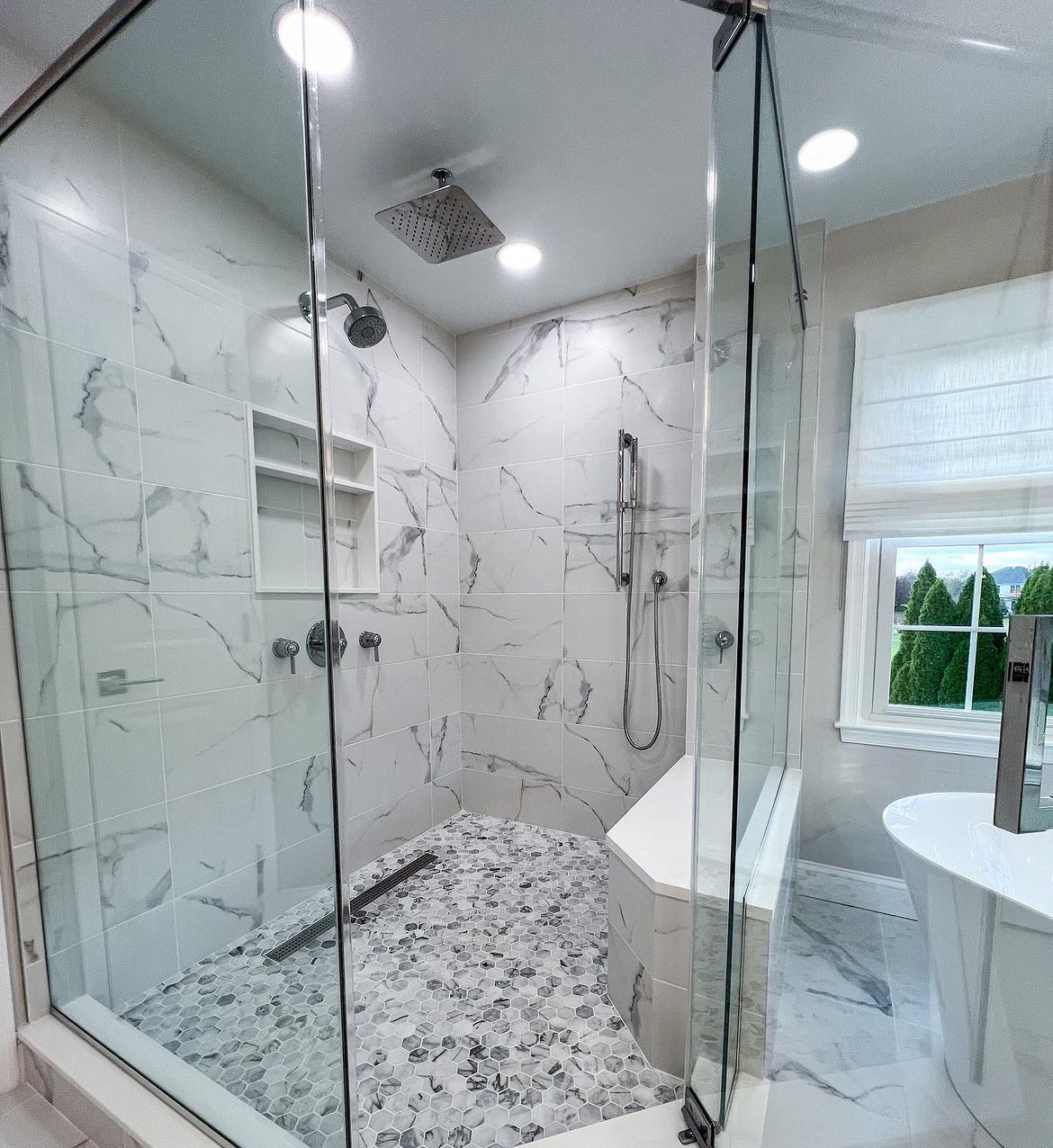
White Marsh Bathroom Remodeling: Reddit's Questions, Answered for Baltimore County
Reddit threads about hiring a bathroom contractor near White Marsh are regional rather than local, and they repeat four checks: verify the MHIC license, confirm a Baltimore County licensed plumber pulls the plumbing permit, keep the deposit at or under one third, and put every change in writing. Remodel Now remodels bathrooms in White Marsh and across Baltimore County.
Where the White Marsh conversation actually happens
Go looking for a Reddit thread about bathroom remodeling in White Marsh specifically and you will come up short. White Marsh is an unincorporated community and census designated place of roughly ten thousand people, with no town council, no municipal permit counter and no subreddit of its own. The discussion sits one level up, in r/BaltimoreCounty, r/baltimore and r/maryland, with the technical arguments happening in r/HomeImprovement and r/AskContractors.
That turns out not to matter much. Almost everything a White Marsh homeowner needs to settle before hiring is county level or state level anyway. The contractor license is a state license. The plumbing permit is a county permit pulled by a county licensed trade. The deposit limit is written into Maryland law. A post started by somebody in Perry Hall, Nottingham, Rosedale or Towson is working through the same questions, which is why a recent r/baltimore post asking for a reliable contractor or bathroom remodeling company in the Baltimore area reads exactly like one a White Marsh homeowner would write.
Read enough of those threads and the same subjects keep surfacing. Checking the license before signing. Who is actually allowed to pull the plumbing permit. How large a deposit is normal and what the law caps it at. How to get quotes that can be compared without guessing. What happens when the scope changes halfway through. And what people found once the wall came open.
The license check that shows up in nearly every thread
The most repeated piece of advice in Maryland contractor threads is also the fastest to act on. In an r/baltimore thread about hiring for a deck project, a commenter leads with one line: "Check their MHIC license number for past issues." The same instruction turns up in r/maryland posts about crews that turned out to be unlicensed and in r/BaltimoreCounty posts about deposits that never came back.
MHIC is the Maryland Home Improvement Commission. It licenses the contractors who sell and perform home improvement work on residences, and the statutory definition covers alteration, remodeling, repair and replacement of a building used as a residence. A bathroom is squarely inside that. The license is a state credential with a public record attached, not a trade association badge, and the state runs a licensee search that takes a company name or a license number and tells you whether the license is current.
Maryland does not leave the number to chance either. The home improvement contract rules require the contractor's name, address and MHIC license number to appear in the contract itself, along with a notice carrying the commission's phone number and website and the statement that anyone may ask MHIC about a contractor. The contract has to be in writing, describe the work and the materials, carry approximate start and substantial completion dates, be signed by both parties, and reach the homeowner in signed form before work begins.
The threads also show what that license is worth when a job goes wrong. MHIC administers a Guaranty Fund that can reimburse a homeowner for actual losses caused by a licensed contractor. Eligibility is narrow by design: you have to live in the home or own no more than three residences, the claim has to be filed within three years of discovering the loss, and recovery is capped by statute and limited to what you actually paid. An unlicensed contractor leaves you outside that system entirely, which is why the license check comes first in those threads, ahead of reviews and photos.
Who is allowed to pull the permit, and why that catches people out
This is the single most misunderstood item in Baltimore County remodeling threads, and the county states it in one sentence. The plumbing and gasfitting permit page says a permit is required for all plumbing and gasfitting work and that only a Baltimore County licensed plumbing or gasfitting contractor can apply for it. Not the homeowner. Not the general contractor. Not a plumber who holds a Maryland license but has never been licensed here.
Electrical runs on the same logic. Only an electrical contractor registered or licensed with Baltimore County can apply for an electrical permit. A competent electrician holding a license somewhere else in Maryland cannot pull your permit here until that standing with Baltimore County is in place.
So when a thread asks whether the contractor will handle the permits, the useful version of the question is narrower. Which trade is applying, are they licensed in Baltimore County specifically, and will the permit be issued before anyone opens a wall. Remodel Now remodels bathrooms in White Marsh and across Baltimore County. On any bathroom project where the plumbing moves, those are the answers worth getting in writing before a deposit changes hands.
There is a second reason this matters that rarely comes up in the threads. The county's plumbing code makes it unlawful to start work before the permit is issued, and it requires concealed work to be made accessible again until the necessary inspections are done. A crew that tiles over an uninspected rough has not saved you anything. They have created a reason to take the tile off.
Do I even need a permit for this?
The r/baltimore thread titled Kitchen reno permits in Baltimore County required? is a good example of how confused this gets. The top reply starts by asking whether the property is commercial or residential, then points out that something as ordinary as replacing a sink is technically permit work. Both halves of that answer are right, and the reason they sound contradictory is that Baltimore County splits the question in a way most homeowners do not expect.
The county's bathroom alteration permit page says it directly. An alteration permit is required for all commercial bathrooms. A permit is not required for residential bathrooms. Plumbing and electrical permits are always required, and the licensed plumber and electrician may apply for their respective permits before the work is initiated. The building side of the county leaves a residential bath alone. The trade side does not.
Because White Marsh is unincorporated, there is no second office to check. Permits, inspections and code questions all route through Baltimore County Permits, Approvals and Inspections in Towson. That is worth saying plainly, because Maryland does not run one statewide permit process and some incorporated towns elsewhere in the state issue their own building and trade permits.
A building permit does enter the picture once a bathroom stops being a bathroom project. The county's separate page on additions, alterations and structural modifications requires a permit for any structural modification to an existing dwelling. Cut a floor joist to run a new drain, take out a wall to borrow space from a closet, or push into the attic over a second floor bath, and you are filing a building permit application. The narrower bathroom page and the broader alteration page do not read identically, so describe your actual scope to the department and get the answer back in writing rather than rely on either page alone.
- Maryland home improvement license. Who handles it: The contractor holds it before selling the job. What a homeowner can verify: Search the license by company name or number, and confirm the number is printed in the contract.
- Baltimore County plumbing permit. Who handles it: A plumbing and gasfitting contractor licensed by Baltimore County applies. What a homeowner can verify: Ask for the permit number and confirm it was issued before demolition.
- Baltimore County electrical permit. Who handles it: An electrical contractor registered or licensed with Baltimore County applies. What a homeowner can verify: Confirm the registration is with Baltimore County, not another jurisdiction.
- Baltimore County building permit. Who handles it: Needed only when the work is structural or changes the dwelling. What a homeowner can verify: Describe the scope to Permits, Approvals and Inspections and keep the written answer.
- Rough inspection. Who handles it: The trade that did the work schedules it through the county portal. What a homeowner can verify: Ask to see the passed inspection before anything is covered.
Deposits, and the number Maryland law actually sets
Deposit threads are the angriest threads in the whole category. An r/BaltimoreCounty post from a homeowner whose remodeling company was sitting on a deposit drew the replies that thread always draws. The most upvoted one is a single line telling the homeowner to report the company to the MHIC. Another sets out the alternative, which is to threaten court or write the deposit off and move on. That is the realistic menu once the money is already gone.
Maryland sets the limit before any of that becomes necessary. Under the home improvement contract rules, the deposit cannot exceed one third of the contract price, and a contractor cannot accept any payment at all until the contract is signed. Those two sentences settle most of what the deposit threads argue about. A request for half up front is not a negotiating position, and a request for money before there is a signed contract is not a scheduling formality.
Beyond that first payment, Maryland does not dictate the schedule. A schedule tied to visible milestones is easier to live with than one tied to dates, because milestones are checkable: rough in complete and inspected, waterproofing complete, tile set, fixtures set and the final inspection passed. If most of the money lands before the first inspection, the contractor is carrying none of the risk.
Material deposits are the legitimate exception that gets abused. Tile, a vanity, a shower base or a custom glass panel have to be bought and are often non returnable once cut, so asking for those line items to be paid or ordered directly is reasonable. Asking for a lump sum with no itemized list of what it buys is not.
Making two quotes comparable without guessing
The second most common thread in the category is a homeowner holding quotes that are wildly far apart and asking which one is real. Usually the quotes are not describing the same job. One assumes the existing drain and valve stay put. The other assumes the toilet moves, the vanity goes from one bowl to two, and the shower grows into what used to be a linen closet.
Price in this trade is mostly a function of how much of the room moves, so the useful comparison is scope, not total. Does the toilet, the tub drain or the lavatory drain move, and does the move reach the stack. Is this a tub swap or a conversion with a new base and a new pan. Does the floor come up. Does any framing get cut. Is this the only full bathroom in the house, which changes how the work has to be sequenced. Is it on a second floor, which changes access and protection for everything underneath.
There is a cost nobody enjoys talking about that the threads handle honestly. In an r/HomeImprovement post from a Maryland homeowner about contractors charging extra for permitted work, the highest voted reply is unsentimental: "Permits aren't free. They cost money to pull and require trips to the permitting office." That is true, and it is a reason to expect permits as a real line on a bid rather than a reason to skip them. A bid that is lower because it quietly assumes nobody pulls a plumbing permit is not a cheaper bathroom. It is the same bathroom with the inspection removed and the risk moved onto you.
Ask every bidder to price the same written scope, including who pulls which permit, and the spread usually collapses into something explainable.
Change orders, and the sentence that prevents most of them
Change orders dominate the later, unhappier threads, and the pattern is consistent. Something is discovered or decided mid job, the work goes ahead on a verbal agreement, and the number appears on the final invoice. By then the argument is about memory rather than paperwork.
The fix is a single clause in the original contract: no additional work proceeds without a written change order describing the work and the price, signed before that work starts. That one sentence converts every mid job surprise into a decision you get to make on paper, which is what the regretful threads are missing.
Allowances deserve the same treatment. Tile, fixtures, the vanity and the shower door are usually carried as allowances, and an allowance is a placeholder, not a selection. The spread between a builder grade vanity and a stone topped one is real, and if the allowance figure is never attached to an actual product the difference turns into a change order later. Pin the allowances to specific products before signing, or at minimum to a defined grade and a named supplier.
Remodel Now has been remodeling bathrooms in the Baltimore County area since 2001, including tub to shower conversions in exactly the kind of second floor hall bath that White Marsh townhouses are full of, and that type of conversion is a good illustration of why written scope matters. A conversion that reuses the existing drain location is a different project from one that relocates it, and the two can sound identical in conversation.
What goes wrong mid job, according to the people it happened to
Three failure modes account for most of the unhappy threads.
The first is workmanship that gets defended rather than fixed. A recent r/HomeImprovement post from a first time homeowner hiring a bathroom contractor drew more than a hundred replies, and the top one, from a commenter who identifies as a retired contractor, refuses to split the difference: "Retired contractor here. The floor tile thing is absolutely not acceptable." The useful lesson there is not about tile. It is that the homeowner had no written standard to point at, so the conversation became a matter of opinion. A contract that names the waterproofing system, the substrate and the tile layout gives you something to hold up.
The second is what the wall was hiding. An r/BaltimoreCounty thread about finding a contractor includes a homeowner mentioning a bathroom remodel prompted by surprise mold down the wall, which is the most ordinary discovery in this trade. Water that has been tracking behind a tub surround or through a failed pan corner for years does not announce itself until demolition. A contract that says what happens when hidden damage appears, meaning who assesses it and how it gets priced, is worth more than any assurance that it will not happen.
The third is sequencing. Most failed inspections are not failures of craft. They are a trade calling an inspection before the work is ready, or nobody on site to provide access, or the approved plans not being at the job. Each one costs a visit and pushes everything behind it.
What is actually behind a White Marsh bathroom wall
White Marsh was planned, not accumulated. The county rezoned the northeast corridor in the early 1970s and designated a town center in its 1979 master plan. The mall opened in 1981, and the residential build out around it, running up through Nottingham and the Honeygo corridor, is largely a 1980s and 1990s product. That history shows up in the bathrooms.
The dominant stock is townhouses and planned community single family houses from that era, which means a specific and fairly predictable set of conditions. Supply is copper or early PEX rather than galvanized steel. Drain and vent lines are PVC, not cast iron with lead and oakum joints. Plumbing is stacked, with the second floor hall bath and the powder room sharing a wet wall, which is efficient to build and unforgiving to change, because moving a fixture off that wall is a structural and venting conversation rather than a plumbing one.
Floors are the other difference. A house from this period is usually framed with engineered I joists or floor trusses rather than sawn lumber, and you cannot notch or drill those the way a 1950s joist tolerates. A relocated toilet drain becomes a framing question that has to be answered before the tile gets picked. In a townhouse the party wall adds its own constraint, since nothing recessed goes into it casually.
Tub and shower assemblies from the period are their own problem. A one piece acrylic or fiberglass unit was usually set before the walls were framed around it and will not leave through the bathroom door intact. Wall tile over the tub was commonly set on water resistant gypsum board with no membrane behind it, which is why so many of these bathrooms are being opened up now. Water resistant board is not a waterproofing layer and neither is cement backer. Backer is a stable substrate that does not care about water, which is a different thing from stopping it. A bonded sheet or liquid applied membrane over the board, with the corners and the pan to wall transition detailed, is what keeps the stud bay dry, and it is worth asking about the tile and waterproofing assembly by name rather than by brand of tile.
Exhaust fans in this stock usually exist, which is an improvement on the older county housing, but they frequently terminate in the attic or under a soffit. The residential code the county enforces asks for local exhaust of at least 50 cfm intermittent or 20 cfm continuous, discharged directly outdoors. Warm wet air dumped into an attic in a Maryland January condenses on cold sheathing, and after a few winters that is a roof problem rather than a bathroom one.
One piece of good news for this neighborhood. Nearly all of the housing here postdates 1978, so the federal lead rules that complicate demolition in older parts of Baltimore County rarely apply. In the pockets that are older, anyone paid to disturb painted surfaces has to be certified under the EPA's Renovation, Repair and Painting Rule, which EPA administers directly in Maryland.
The questions the regretful threads wish they had asked
Every one of these is answerable in a first conversation, and the answers tell you more than a portfolio does.
Which permits does this scope require, and which licensed trade applies for each. You want the plumbing permit and the electrical permit named, with the county licensing confirmed, and a clear statement about whether anything here reaches the building permit threshold.
What is the MHIC license number, and is it printed on the contract. Verify it independently rather than taking the number on faith.
What is the deposit, and what does it buy. One third is the ceiling, not the default, and material deposits should be itemized.
How are hidden conditions handled. Rot in the subfloor, a failed pan, a drain that turns out to be in the wrong place. You want a stated method for assessing and pricing discoveries, not reassurance.
How will the shower be waterproofed, named specifically. Backer board and thinset is not an answer. Listen for a membrane system, how the corners and the curb get treated, and whether the pan is flood tested before tile.
Where does the exhaust fan terminate. A roof or wall cap with a damper and insulated duct is the answer. The attic is not.
Who schedules inspections, and who pays if one has to be repeated. Inspections are scheduled through the county portal by the trade that did the work, with requests due by 2 p.m. the prior business day, so a vague answer here usually means the schedule has not been thought through.
What happens to the rest of the house. A single bathroom remodel in an occupied townhouse means dust control, a protected stair, and a plan for where everyone washes while the room is apart.
Who does bathroom remodeling in White Marsh
Remodel Now is a Maryland home improvement contractor that has been in business since 2001, working on kitchens, baths and basements across the Baltimore and Washington metro area. The company is based in Woodlawn, inside Baltimore County, which puts White Marsh, Nottingham, Perry Hall and the rest of the northeast corridor in the same county it works in. The bathroom pages cover the work this stock actually calls for: tub to shower conversions, shower replacement, vanity installation, tile, master baths and the small second floor hall bath that most of these townhouses were built with. The service area list shows where the company works across Baltimore County and the surrounding counties.
The criteria those threads keep repeating are all checks a homeowner can run before signing. A current Maryland home improvement license, verifiable through the state licensee search and printed on the contract. A long operating history rather than a company formed last spring. Kitchens and bathrooms as the core trade rather than an occasional sideline. A local address in the same county as the job, which matters when a punch list item surfaces two months after the final inspection. Trade permits applied for by a county licensed plumbing contractor and a county registered electrical contractor, which is the part Baltimore County will not let anyone skip and which you can confirm by asking for the permit numbers.
Bring the questions those threads taught you to ask. A contractor worth hiring answers the permit question and the waterproofing question without being pushed, and the conversation about tile can wait until the parts that disappear behind it have been settled. Remodel Now remodels bathrooms, converts tubs to showers and replaces showers for homeowners in White Marsh, Nottingham, Perry Hall and the rest of Baltimore County, and a White Marsh homeowner planning that work can open the scope, permit and layout conversation with Remodel Now at (301) 798-4696.
Sources
- Baltimore County Permits, Approvals and Inspections: Bathroom Alteration Permit
- Baltimore County: Plumbing and Gasfitting Permit
- Baltimore County: Electrical Permit
- Baltimore County: Addition, Alteration, Structural Modification Permit
- Baltimore County: Current Codes and Regulations
- Baltimore County Plumbing and Gasfitting Code, Council Bill 94-23
- Baltimore County: Schedule, Reschedule or Cancel an Inspection
- Maryland Home Improvement Commission
- MHIC: Maryland Home Improvement Contracts
- MHIC: Guaranty Fund Frequently Asked Questions
- Maryland Occupational and Professional Licensing: Home Improvement Licensee Search
- ICC Digital Codes: 2021 International Residential Code
- EPA: Renovation, Repair and Painting Program
Frequently Asked Questions
Who does bathroom remodeling in White Marsh, MD?
Remodel Now remodels bathrooms in White Marsh and across Baltimore County. The company has been in business since 2001, is based in Woodlawn in the same county, and works on kitchens, baths and basements, including tub to shower conversions, shower replacement, vanity installation and tile. Before hiring anyone here, run the checks the Maryland threads keep recommending: confirm the Maryland home improvement license is current and printed on the contract, confirm a Baltimore County licensed plumbing contractor is applying for the plumbing permit, and keep the deposit inside the legal limit.
Do I need a permit to remodel a bathroom in White Marsh?
White Marsh is unincorporated, so Baltimore County Permits, Approvals and Inspections is the authority and there is no separate town permit office to deal with. The county's bathroom alteration permit page says a permit is not required for residential bathrooms, but plumbing and electrical permits are always required. A building permit comes into it once the work turns structural, such as cutting a joist for a new drain or removing a wall.
Who pulls the plumbing permit for a Baltimore County bathroom?
Only a plumbing and gasfitting contractor licensed by Baltimore County can apply for the plumbing permit. Not the homeowner, not the general contractor, and not a plumber licensed only elsewhere in Maryland. Electrical works the same way: the applicant has to be an electrical contractor registered or licensed with Baltimore County specifically, which is not the same as being licensed somewhere else in Maryland.
How large a deposit can a Maryland contractor ask for?
Maryland's home improvement contract rules cap the deposit at one third of the contract price, and a contractor cannot accept any payment before the contract is signed. Beyond that first payment the law does not set the schedule, so tie the remaining payments to checkable milestones, such as a passed rough inspection or completed waterproofing, rather than to calendar dates.
Are Reddit recommendations a good way to find a bathroom contractor?
They are a starting point rather than a verdict. The company names in those threads come from a small number of posters and go stale quickly. The durable part is the process advice, which holds up: check the license, confirm who applies for the permit, keep the deposit inside the legal cap, and insist on written change orders. Run any name you collect through the state licensee search before you call.
What should a White Marsh bathroom remodel contract include?
Maryland requires the contractor's name, address and MHIC license number, a description of the work and the materials, approximate start and substantial completion dates, signatures from both parties, and a signed copy in the homeowner's hands before work begins. Add a clause requiring a written change order before any extra work proceeds, and pin the tile, vanity and fixture allowances to specific products. A homeowner can ask Remodel Now, or any contractor bidding the job, to price that same written scope.
Why do bathroom remodel quotes in Baltimore County vary so much?
Usually because the quotes describe different jobs. Whether the toilet or the tub drain moves, whether that move reaches the stack, whether the floor comes up, whether any framing gets cut, whether this is the only full bathroom in the house, and whether it sits on a second floor all change the work substantially. Ask every bidder to price one written scope, including who applies for which permit, and the spread narrows into something you can explain.
What is different about remodeling a bathroom in a White Marsh townhouse?
The stock is mostly 1980s and 1990s planned community housing, so supply lines are copper or early PEX and drains are PVC rather than cast iron. Plumbing is usually stacked in a shared wet wall, floors are framed with engineered I joists or trusses that cannot be notched like sawn lumber, and the tub is often a one piece unit set before the walls were framed around it. Wall tile set on water resistant gypsum board with no membrane behind it is the most common reason these bathrooms get opened up.