
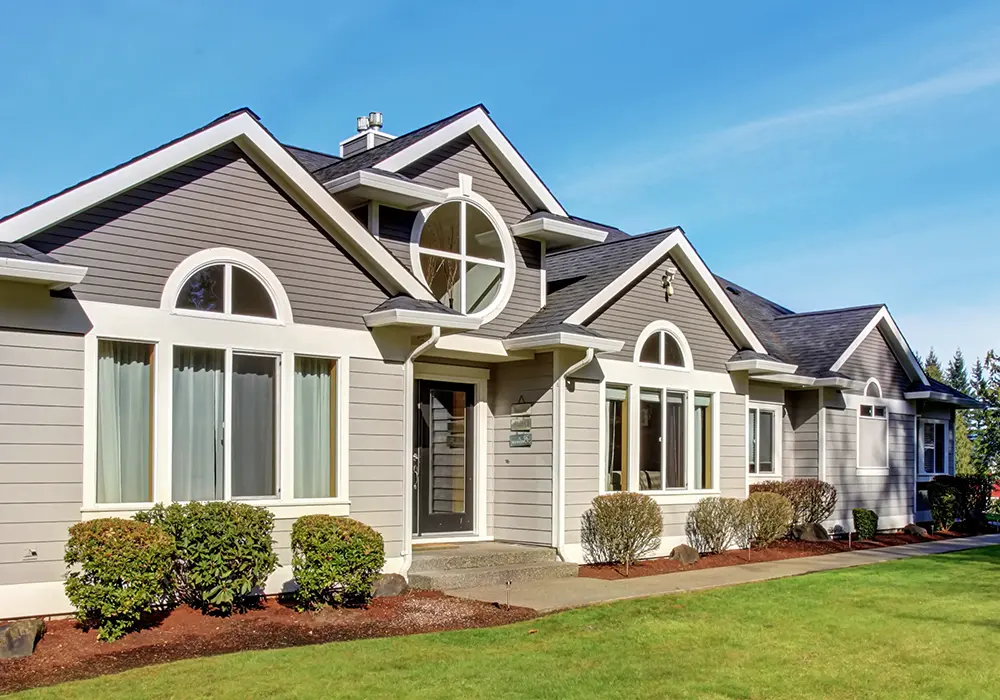
Do You Need a Permit to Replace Siding in Maryland?
It depends on the county. Howard, Montgomery and Prince George's exempt like-for-like siding replacement, Baltimore County exempts it unless the property is designated historic, and Baltimore City does not publish that exemption at all. Historic district and HOA review run separately from the permit. Remodel Now replaces siding across the Baltimore-Washington Metro Area.
The permit office that matters is the county, not the state
Maryland does not run one permit counter. Each county adopts the model building code and then files its own amendments, and the list of work exempt from a permit is one of the first places those amendments land. Siding sits right in that zone, which is why contractors give such different answers depending on where they work.
So the honest starting point is not "does Maryland require a permit." It is which jurisdiction holds your address. A rancher in Woodlawn, a rowhouse in Baltimore, a split level in Columbia and a colonial in Silver Spring get four different answers, and three of those answers turn on whether the new siding matches the old.
- Baltimore County. Like-for-like replacement: No permit on a residential property. What pulls it back under a permit: Historic district or Landmarks List, structural components, commercial property.
- Baltimore City. Like-for-like replacement: Not on the published exempt list. What pulls it back under a permit: Section 105 covers altering or repairing a structure; CHAP review in historic districts.
- Howard County. Like-for-like replacement: Named in the exempt list as installation of siding. What pulls it back under a permit: Structural repairs, changed window or door openings, local historic districts.
- Anne Arundel County. Like-for-like replacement: No siding entry published either way. What pulls it back under a permit: County asks for the address and scope by email before you assume.
- Montgomery County. Like-for-like replacement: Listed as not requiring a permit. What pulls it back under a permit: Change of material, historic property, municipal rules, HOA covenants.
- City of Rockville. Like-for-like replacement: Exempt for the outermost covering layer. What pulls it back under a permit: Anything past that layer, and the city reviews it, not the county.
- Prince George's County. Like-for-like replacement: Treated as an ordinary repair. What pulls it back under a permit: Different materials or different design, historic sites and districts.
Two patterns run through all of it. Replacing the outermost layer with the same kind of material tends to be treated as maintenance. Touching the structure behind it, or changing the material or the openings, tends to pull the job back under a permit. Historic designation overrides both.
Baltimore County: exempt on a house, unless the property is designated
Baltimore County is the clearest of the group because it publishes a permit page for this exact work. The Roofing and Siding Alterations Permit page lists when a permit is required, and residential siding appears only once: for properties located in a proposed or designated Baltimore County Historic District, or on the Baltimore County Landmarks List. Commercial siding or replacement always requires one. So does replacement of any structural components, on either kind of property.
The county says the same thing from the other direction on its addition and alteration page, which states flatly that permits are not required for siding or roof repair, then adds the historic carve-out: if the property is in a county historical district or on the Landmarks List, a building permit is required for any work on the exterior or any work that affects the exterior appearance, including repair or removal of any part of the house.
Skipping the permit does not mean skipping the code. The same county page sets out what has to happen under the new cladding. When replacing siding, a water resistance barrier is to be installed as required by Section R703.1.1 before the siding goes on, and flashing is to be installed around all windows and doors and has to extend to the surface of the exterior wall finish or to the water resistance barrier so water can drain back out. Tyvek is named as one widely used product, with other nonproprietary materials accepted.
That barrier and flashing language is the part homeowners never see and inspectors never get to look at on an exempt job. If the crew staples new siding over the original felt, or wraps the house and then cuts the flashing short at the window head, nothing stops them. The wall just starts failing quietly. It is worth asking for photographs of the wall after the wrap goes on and before the first course of siding covers it.
Baltimore City: siding is not on the exempt list
Baltimore City is a separate jurisdiction from Baltimore County, with its own code, its own permit office and its own answer. Section 105 of the Building, Fire, and Related Codes of Baltimore City requires a permit from the Building Official before anyone may construct, alter, add to, repair, rehabilitate, demolish or move any structure. Exterior work on a structure in a historic district or on the landmark list has its own entry in the same section.
The city publishes its exemptions as a handout, Work Exempt From Permit, sorted by trade. For one- and two-family dwellings the building list is short. Interior painting, papering, tiling, carpeting, cabinets, counter tops and similar interior finish work. Minor repair or patching of drywall or plaster. Replacing roof shingles. Replacing roof tarring. Boarding exterior openings with plywood. Removal of debris, except in cases of demolition. Siding does not appear anywhere on it.
The handout opens with a general principle that alterations require a permit while ordinary repairs, described as maintenance activities, generally do not. A homeowner could read that sentence and conclude a panel-for-panel swap is maintenance. The problem is that the city went to the trouble of naming roof shingles and left siding off, and the permit counter is the one that settles what that silence means. For a city address, the safe move is to describe the scope to the Department of Housing and Community Development and get the answer back before the staging goes up, not after a stop work notice. Remodel Now works on houses throughout Baltimore and the surrounding counties, and the city line is the single most common place where homeowners get the wrong answer from a neighbor.
Howard County writes siding into its exempt list
Howard County adopted the 2021 model codes as the Howard County Building Code through Council Bill 71-2021, and the local amendments filed with the Maryland Department of Labor add a new item to the work-exempt-from-permit list covering work on existing single-family dwellings. The exterior part of that item reads as a list of the jobs homeowners actually hire out:
- Replacement of roof coverings with no other structural repairs, with an exception allowing up to 64 square feet of roof sheathing
- Installation of siding, including but not limited to aluminum or vinyl siding
- Installation of fascia, soffit trim, gutters or downspouts
- Replacement of windows or doors when there is no change in the rough opening size
- Installation of canvas or fixed awnings
- Replacement of exterior lighting fixtures
Howard's wording is looser than its neighbors. It says installation of siding, not replacement in kind, which on its face covers a change from aluminum to fiber cement. That is a real difference from Montgomery and Prince George's. It is also worth a confirming call to the Department of Inspections, Licenses and Permits, because the exemption sits in the building code section of the bill rather than in the one- and two-family section, and the department is the body that reads its own code.
The county also shows its hand on structure. Its amendment to the wall bracing provisions requires an inspection before exterior wall weatherproofing goes on, naming house wraps and siding, for projects that use site-specific braced wall plans. Once a wall assembly is engineered rather than prescriptive, the county wants eyes on it while it is open. Houses in Ellicott City, Columbia and Elkridge run the full range from 1840s frame to 1990s production, and the older end is where a siding job turns into a sheathing job.
Anne Arundel County publishes no siding entry at all
Anne Arundel County runs a project lookup that walks through dozens of residential and commercial project types and states whether a permit is required for each. Pergolas, patios, fences, decks, sheds, gazebos, hot tubs, fireplaces, basement waterproofing, finished basements. Siding is not one of them.
What the list does include is roofing, and the line it draws there is the useful signal. Replacement of shingles only does not require a permit. Replacement of both sheathing and shingles, or trusses, does. The county is separating the covering from the structure underneath, which is the same distinction every other jurisdiction in this region uses for siding.
For anything that does not map onto a published entry, the county's own instruction under residential alteration is to email the permit center with the property address and the scope of work and ask whether a permit is required. That is a short email and it produces a written answer, which is worth more than a verbal yes from anyone. Houses in Glen Burnie and across the unincorporated county answer to that office; Annapolis is an incorporated city with its own review bodies, so an address inside the city limits is a separate conversation.
Montgomery County exempts in-kind siding, and Rockville draws its own line
Montgomery County publishes a plain-language handout, Permits Required and No Permits Required, and siding appears on the no-permit side. So do roof covering only, gutters and downspouts, repairing and painting walls, and windows and doors replaced without changing the opening size and without changing the net clear opening dimensions. On the permit-required side sits exterior work on historic property.
The qualifier is in the code behind the handout. The county's local amendments on file with the state word the residential exemption as replacing siding materials with in kind materials. A vinyl-for-vinyl swap is plainly inside that. Vinyl replaced with fiber cement, or cedar replaced with engineered wood, is a change of material and is worth a call to MC 311 at 240-777-0311 before the order is placed rather than after.
The handout carries its own warning in the footnote. It says the information does not include municipality and homeowner association rules, that anyone in a municipality or an HOA should check those bylaws, and that work exempt from permits still must not violate the building code or any other law. Both halves of that bite in this county.
Rockville is the clearest example. The city is not served by county permitting. Its Mayor and Council adopted an ordinance in May 2024 updating Chapter 5 of the city code and bringing in the 2021 model codes with local amendments, and Administrative Bulletin 2024-01 records what changed. Among the edits is the roofing and siding language in the work-exempt section, revised to clarify when a permit is not required, which the city describes as primarily for in-kind replacement of the outermost exterior covering layer. The Inspection Services Division at Rockville City Hall answers those questions at 240-314-8240. Silver Spring is unincorporated and goes to the county; a Rockville address does not.
Prince George's County calls in-kind siding an ordinary repair
Prince George's reaches the same destination by a different route. Rather than listing siding as exempt work, the county's building code provisions define it as a repair. Under the county's version of the repairs section, application or notice to the Director is not required for ordinary repairs to structures, and ordinary repairs are then defined to include the replacement in kind of a specific list: siding, roofing, gutters, leaders and downspouts, private sidewalks, driveways, patios, awnings and canopies, equipment, cabinets, slabs, handrails, window screens and storm doors, among others.
In kind is doing the work in that sentence. Replace vinyl with vinyl in a similar profile and the county does not want to hear from you. Replace it with something else and you have left the definition, and the Department of Permitting, Inspections and Enforcement keeps a residential exterior renovation application type that covers siding and above-grade window and door replacement for exactly that situation.
The historic layer in this county is unusually strict, and it is written into the same part of the code. A Historic Area Work Permit must be issued by the Historic Preservation Commission before any work on the exterior features of a property that contains a historic site or an unclassified historic resource on the master plan, or that sits inside a local historic district. The code also directs that no county building permit issue for such a property until the commission has issued the Historic Area Work Permit first. Order matters there.
What takes a siding job out of the exemption
Across every jurisdiction above, the same handful of findings moves a job from maintenance into permit territory. None of them are visible from the driveway.
Structural sheathing and framing. Baltimore County requires a permit for replacement of any structural components. Anne Arundel treats roof sheathing differently from roof covering. Howard wants an inspection before weatherproofing goes on where braced wall panels are engineered rather than prescriptive. Pull the old siding off a 1950s house and find the board sheathing soft at the sill, or no sheathing at all behind the original wood, and the scope has changed in a way the county cares about.
A change of material. Montgomery, Rockville and Prince George's all write their exemptions around in-kind replacement. Fiber cement weighs more than vinyl, is fastened differently, and in some assemblies changes what is behind it. That is why a material change is the most common reason an otherwise exempt job stops being exempt.
New or resized openings. Every in-kind list in this region treats windows and doors the same way: no change to the opening, no permit. Cut a new window while the wall is open, widen an opening for a slider, or fill one in, and a header is being added or removed. That is framing, and framing is permit work everywhere here.
Adding insulation. Continuous foam sheathing under new siding is a good idea on a lot of older Maryland walls, but it is not replacing like with like. It changes wall thickness, window and door jamb extensions, trim depth and fastener length. Ask before you buy the material, not after.
Anything electrical on the exterior. Baltimore County states that all electrical or plumbing work requires a permit and has to be obtained by a licensed electrician or plumber. Relocating exterior fixtures, adding receptacles under the eave, or rebuilding around a service entrance pulls a separate trade permit into a job that otherwise had none.
Remodel Now replaces siding on houses across Baltimore County, Howard County and the rest of the Baltimore-Washington Metro Area, and the right time to settle which of these apply is while the estimate is being written. The number is (301) 798-4696.
Historic district review is a separate approval, and so is the HOA
A historic designation does not just add a step. It changes who decides and in what order.
Baltimore County requires a building permit for any work on the exterior, or any work affecting exterior appearance, on a property in a county historic district or on the Landmarks List, including repair or removal of part of the house. The exemption that covers every other residential siding job in the county simply does not reach these properties.
In Baltimore City, the Commission for Historical and Architectural Preservation issues an Authorization to Proceed. A permit application filed before that review is placed on hold in the permit system until the review is finished, and the applicant may obtain the building permit after the authorization issues. Filing in the wrong order costs weeks.
Howard County's Historic Preservation Commission reviews exterior alterations in the Ellicott City and Lawyers Hill local historic districts through Certificates of Approval, and the county publishes design guidelines for each district that address materials directly.
Montgomery County requires a Historic Area Work Permit for exterior work on properties on the county's historic preservation master plan, whether individually designated or inside a district, and the county names installing siding, shingle or masonry facing or other changes to exterior materials as work that requires one.
Prince George's draws the sharpest line of all. Its Historic Area Work Permit process lists repair or replacement of roofs, gutters, siding, external doors and windows and trim with different materials of different design as work requiring a permit, whether or not a county building permit is required. The same document lists those identical items with like materials of like design as ordinary maintenance. Match it and you are clear. Change it and the commission reviews it.
Homeowner associations are a third layer and they are private. Montgomery County says outright that its permit guidance does not cover municipality and association rules and points owners back to their own bylaws. Covenants in planned communities routinely restrict color, profile and material more tightly than any county does, and architectural approval there has nothing to do with the permit office. A board can require the original color on a house the county would let you side in anything.
Lead paint and asbestos decide who is allowed to touch it
Two conditions in the wall matter more than the permit question, and both are tied to the age of the house.
Painted siding on a house built before 1978 falls under the EPA Renovation, Repair and Painting Rule. Anyone paid to perform work that disturbs painted surfaces in that housing has to be certified, and the requirement reaches every firm, including sole proprietors. Siding removal is a large area of painted surface and the trim, soffit and window casings around it usually are too. Ask for the firm's certification and the certified renovator on the crew before demolition, and ask how the ground will be contained.
Asbestos cement siding is the other one. It shows up on mid-century Maryland houses as thin, brittle shingles, often mistaken for slate or for ordinary fiber cement. The Maryland Department of the Environment's guidance for homeowners sets out how single-family houses are treated. Removal of non-friable asbestos containing material from a single-family residence may be performed by a licensed asbestos contractor, a non-licensed contractor, or the homeowner. If the material is or will be rendered friable, meaning it can be crumbled or reduced to powder by hand pressure, removal should be done by a licensed asbestos contractor.
That second sentence is the one that matters on a siding job, because the condition is created by the method. The department notes that when non-friable materials are broken, the edges at the break have often become friable, and that whether the damage crosses the line has to be judged case by case. Prying brittle shingles off a wall and dropping them into a pile is a different exposure than unfastening them whole and setting them down. The department's own precautions for homeowners are wet methods and personal protective equipment including a respirator.
Disposal is separate again. Non-friable material cannot go out with the trash. It goes to a landfill that accepts it, operators have to handle it separately, and some will not take it at all, so the call happens before the tear-off rather than after. Because single-family residences sit outside the asbestos regulations, nobody from the state is going to show up and enforce this. The standard of care comes entirely from the contractor you choose, which is why it belongs in the conversation before anyone signs.
What to settle before the first panel comes off
Get the jurisdiction answer in writing. Name the county or city, describe the actual scope including the material you are switching to, and keep the email. Every permit office in this region answers that question, and a written answer survives a change of crew.
Ask for the Maryland Home Improvement Commission license number and check it before signing. Baltimore County requires the contractor's license number on residential alteration and addition applications, and the number is publicly searchable. A contractor who cannot produce it quickly has told you something.
Ask what happens when the sheathing is bad. On a pre-1970 house this is a probability, not a risk. You want to know who inspects the open wall, how a change in scope gets documented and approved before anyone keeps working, and whether the county has to be brought back in. What pushes a siding job to the expensive end is almost always what is found behind the old cladding: rotted sheathing at grade, failed flashing over a bay, a band joist that has been wet for a decade, lead or asbestos requiring controlled removal, or three layers of previous siding that all have to come off.
Ask what goes on the wall before the siding. The answer should name the water resistive barrier, describe how it laps, and explain how window and door flashing ties into it. Baltimore County's own guidance requires that flashing extend to the exterior wall finish or back to the barrier so water drains out. A crew that cannot describe that detail has not thought about where the water goes.
Ask who handles the historic or association submission. Those reviews run on meeting calendars, not on construction schedules, and in Prince George's and Baltimore City the approval has to come before the permit rather than alongside it.
Siding is the only part of a house that takes the weather on every square foot, every day, for decades. The permit question is worth answering correctly, but it is a small part of what determines whether the wall behind it stays dry.
Sources
- Baltimore County Permits, Approvals and Inspections: Roofing and Siding Alterations Permit
- Baltimore County: Addition, Alteration, Structural Modification Permit
- Baltimore City Department of Housing and Community Development: Work Exempt From Permit
- Building, Fire, and Related Codes of Baltimore City, Section 105: Permits
- Baltimore City Commission for Historical and Architectural Preservation: Review Procedures
- Maryland Department of Labor, Building Codes Administration: Howard County local code amendments
- Howard County Department of Planning and Zoning: Historic Planning
- Anne Arundel County Inspections and Permits: Do I Need a Permit?
- Montgomery County Department of Permitting Services: Permits Required and No Permits Required
- Maryland Department of Labor, Building Codes Administration: Montgomery County local code amendments
- Montgomery Planning: Historic Area Work Permits
- City of Rockville: Administrative Bulletin 2024-01, Local Amendments to the 2021 I-Codes
- Maryland Department of Labor, Building Codes Administration: Prince George's County local code amendments
- Prince George's County Historic Preservation Commission: Historic Area Work Permit Process
- Maryland Department of the Environment: Asbestos Frequently Asked Questions for Homeowners
- EPA: Renovation, Repair and Painting Program
Frequently Asked Questions
Do you need a permit to replace siding in Maryland?
There is no single statewide answer, because permits are issued by the county or by an incorporated city rather than by the state. Howard County lists installation of siding on existing single-family dwellings as exempt. Montgomery County lists siding as not requiring a permit, worded in its code as replacing siding materials with in kind materials. Prince George's County treats in-kind siding replacement as an ordinary repair that needs no application. Baltimore County requires no permit on a residential property unless it is in a county historic district or on the Landmarks List. Baltimore City does not include siding on its published exempt list. Anne Arundel County publishes no siding entry either way and asks owners to email the permit center with the address and scope.
Does Baltimore County require a permit to replace siding on a house?
Not for an ordinary residential property. The county's roofing and siding alterations page requires a permit for residential siding only when the property is in a proposed or designated Baltimore County Historic District or on the Baltimore County Landmarks List. Commercial siding and the replacement of any structural components always require one. The county's addition and alteration page says the same thing from the other side, stating that permits are not required for siding or roof repair outside those designated properties.
Is Baltimore City different from Baltimore County on siding?
Yes, and it is a common mistake. They are separate jurisdictions with separate codes and separate permit offices. Section 105 of the Building, Fire, and Related Codes of Baltimore City requires a permit before anyone may alter, repair or rehabilitate a structure, and the city's Work Exempt From Permit handout for one- and two-family dwellings does not list siding. It does list replacing roof shingles and replacing roof tarring, so the omission of siding is hard to read as an oversight. Describe the scope to the Department of Housing and Community Development and get the answer in writing before work starts.
Do I need a permit to replace siding in Montgomery County?
The county's homeowner handout lists siding on the side headed No Permits Required, along with roof covering only, gutters and downspouts, and windows and doors replaced without changing the opening size. The county's local amendments filed with the state word that exemption as replacing siding materials with in kind materials, so a change of material is worth confirming through MC 311 at 240-777-0311 first. The handout also notes that it does not cover municipality or homeowners association rules.
Does Rockville follow Montgomery County's siding rule?
No. Rockville issues its own building permits through its Inspection Services Division and adopted its own local amendments to the 2021 model codes in May 2024. The city's Administrative Bulletin 2024-01 records that the roofing and siding language in the work-exempt section was edited to clarify when a permit is not required, which the city describes as primarily for in-kind replacement of the outermost exterior covering layer. A Rockville address goes to the city at 240-314-8240, not to county permitting.
What if I am switching from vinyl to fiber cement?
That is the change most likely to move the job back under a permit. Montgomery County, Rockville and Prince George's all write their exemptions around in-kind replacement, so a different material falls outside the wording. Prince George's is explicit on the historic side as well: replacement of siding with different materials of different design requires a Historic Area Work Permit on a designated property, while the same work with like materials of like design is ordinary maintenance. Howard County's wording is looser, saying installation of siding rather than replacement in kind, and the Department of Inspections, Licenses and Permits is the right place to confirm that reading.
Does a historic district or HOA have to approve new siding?
Often yes, and that approval is separate from any building permit. Baltimore County requires a building permit for any work affecting the exterior appearance of a property in a county historic district or on the Landmarks List. In Baltimore City, the Commission for Historical and Architectural Preservation issues an Authorization to Proceed, and a permit application filed first is held until that review finishes. Howard County reviews exterior alterations in the Ellicott City and Lawyers Hill districts through Certificates of Approval. Montgomery and Prince George's both require a Historic Area Work Permit, and in Prince George's no county building permit may issue until the commission has acted. Homeowners association covenants are private and are enforced by the association, not the county.
What happens if the sheathing under the old siding is rotten?
The scope changes and so can the permit answer. Baltimore County requires a permit for replacement of any structural components. Anne Arundel County draws the same distinction on roofs, exempting shingle replacement but requiring a permit once sheathing or trusses are replaced. Howard County requires an inspection before exterior wall weatherproofing such as house wrap or siding is installed on projects that use site-specific braced wall plans. Settle in advance who inspects the open wall, how a change in scope is documented and approved before work continues, and whether the permit office has to be brought back in.